Most clubs start with excitement. A child asks to try something, you find a class, buy the kit and sign up for the term. Then life takes over. The club becomes part of the week, and nobody stops to ask whether it's still the right thing.
Children don't always tell you when something has stopped being fun. They might not want to disappoint you, or not have the words for it, or not realise they're allowed to stop. And they don't always mention the new thing they can't stop thinking about, either.
Little and often beats the big conversation
"Do you still want to do swimming?" is a hard question to answer on the spot. Small, regular check-ins work better, and children find them much easier:
- Ask on the way home, while it's fresh. "What was the best bit today?" and "Was anything tricky?" tell you more than "Was it good?"
- Use faces, not words, for younger children. Pointing at a happy, okay or sad face is easier than explaining a feeling.
- Watch for patterns, not one bad day. Everyone has an off week. Three "okays" in a row is worth a gentle chat.
- Ask what they'd like to try. Their answer might surprise you.
Notice what they keep coming back to
Some of a child's strongest interests never become a club. The dinosaur phase. The endless LEGO builds. The questions about space at bedtime. The drawing they do without being asked.
Noticing these "sparks" helps you choose what to offer next, and tells your child that what they care about matters to you too.
Every child is different
In a family with more than one child, it's easy for clubs to follow the oldest, or the most enthusiastic, or whoever fits the timetable. A quick check now and then, one child at a time, helps:
- Does each child have something that's theirs, not just something they come along to?
- Is anyone doing a lot more, or a lot less, than they'd like?
- Is someone quietly going along with it because it's easier for everyone?
Fair doesn't have to mean the same. It means each child gets a say.
Stopping is allowed
Sometimes the answer is to stop. That's not failure. Trying something and finding out it isn't for you is a useful thing to learn, and it makes room for something they'll love more. Many families agree to finish the term, then decide together.
How Okeya helps you listen
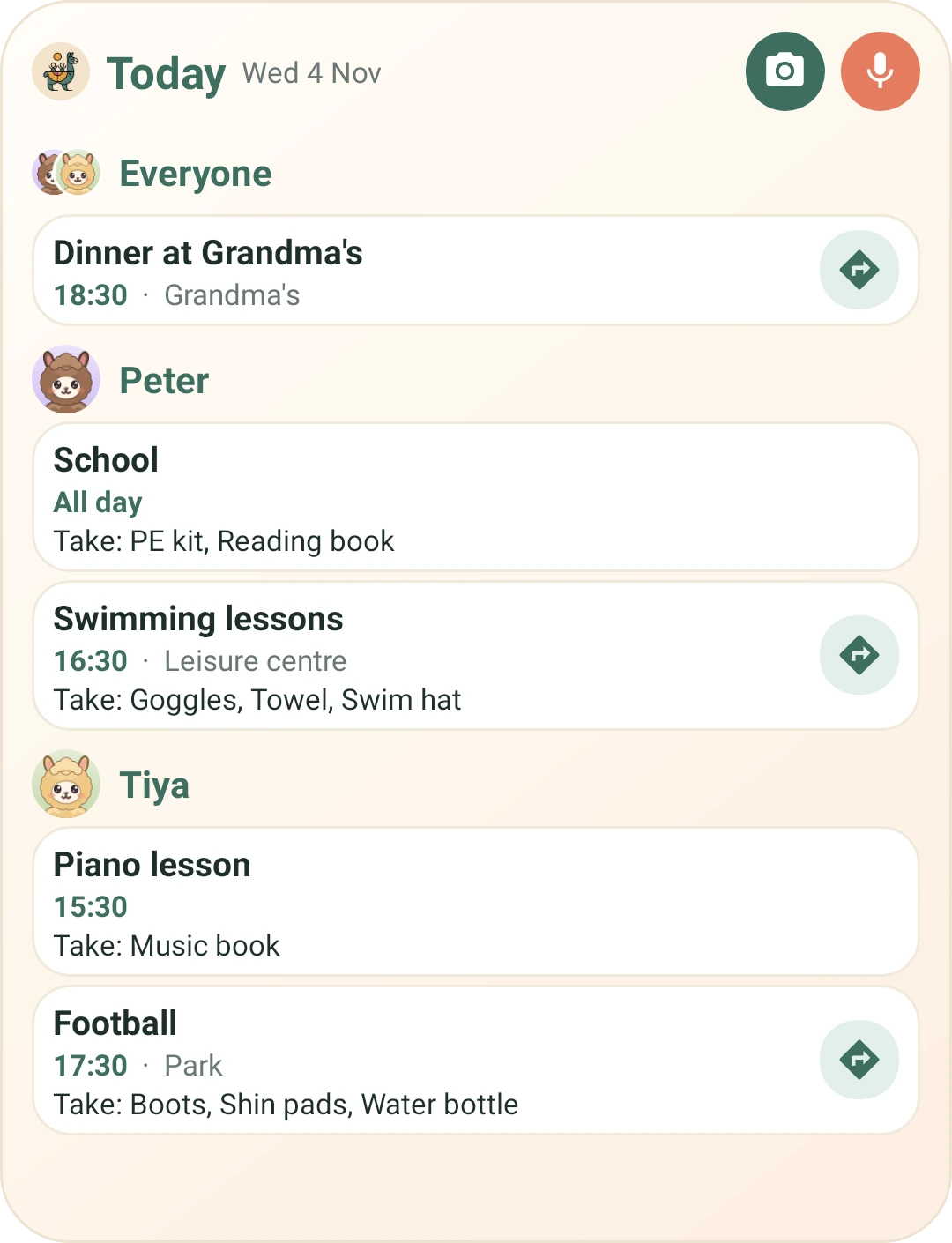
- "How did it go?" After a club session, Okeya asks on Today. Your child taps a face: loved it, good, okay or didn't enjoy.
- A gentle nudge. If a club has felt only "okay", or not enjoyable, lately, Okeya suggests a chat before the next term. It never decides for you.
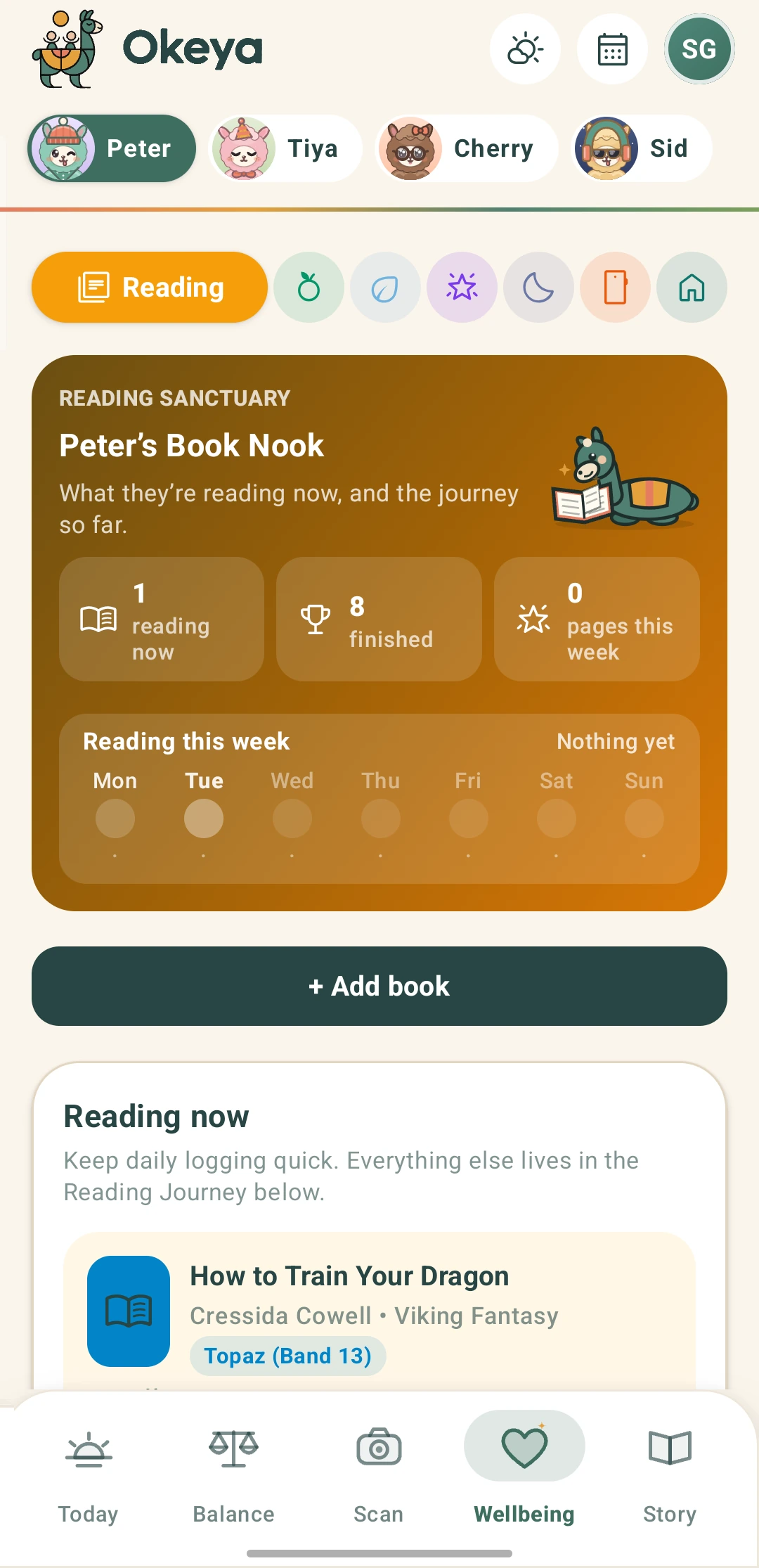
- Follow the sparks. Add curiosity moments, like a question at bedtime, a new project or a new obsession, and Okeya shows what keeps coming up over time.
- Try something new. One-off experiences to try before committing to another weekly club.
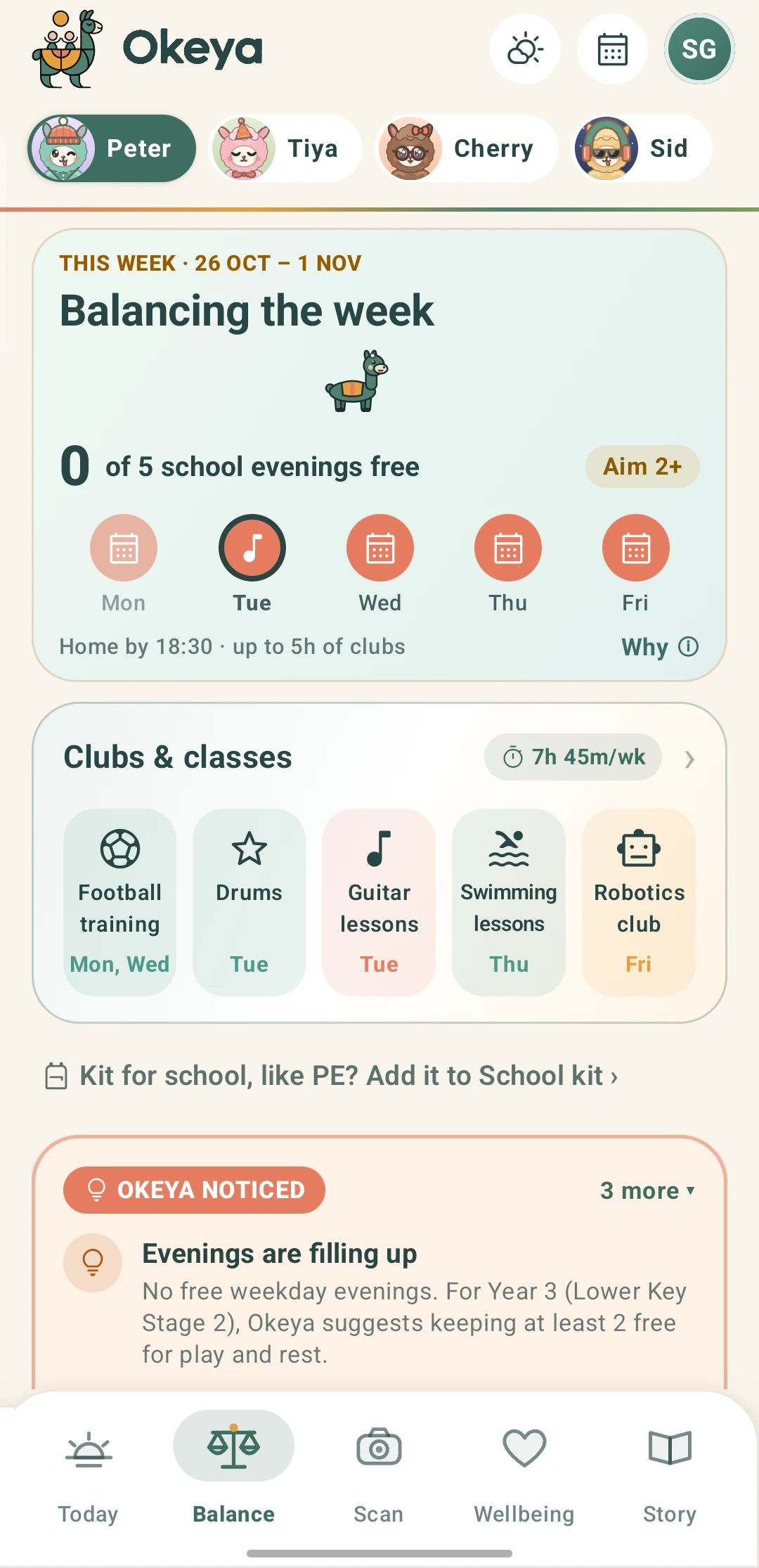
- Every child, separately. Each child has their own week, their own clubs and their own interests, so nobody's story gets folded into someone else's.
When a club ends, it stays in their Passport with how they felt about it. It's a small record that you listened.