Ask most parents which swimming stage their child is on and you'll get a pause. Stage 4? Or was that last year? The certificate came home in a book bag, was admired on the fridge for a week, and then went somewhere. Possibly the drawer with the takeaway menus.
Multiply that by every club, every child and every year, and a lot of hard work disappears without a trace: belts, grades, badges, awards, first performances, the season they finally made the team.
Why it gets lost
Children's progress is spread across lots of places, and none of them is yours:
- Paper certificates and badges come home at random, often months apart.
- Each club keeps its own records, in its own app, website or spreadsheet. When your child stops going, you usually lose access.
- Every activity counts progress differently. Swimming has stages, gymnastics has levels (some count down rather than up), martial arts have belts in colours that differ from club to club, and music and dance have grades.
- Some of the best progress has no certificate at all. Football, chess or forest school build confidence, teamwork and persistence, but nobody hands out a grade for that.
And when a club ends, as most do, the whole story of it tends to end with it.
Why it's worth keeping
It isn't about collecting trophies. A record of how far they've come helps in quieter ways:
- On a hard week, when they want to give up, you can show them where they started.
- When they move school or club, you know what they've already done.
- Later on, it's the material for applications, a first CV or a personal statement, when "I did karate for four years and got my brown belt" is worth remembering properly.
- And it's their story. Children love looking back at what they used to find hard.
A simple way to keep track
You don't need a system. A few habits are enough:
- Note it on the day. When a certificate comes home, write down the activity, the stage and the date before it goes on the fridge.
- Keep one list per child, not one per club.
- Write down the clubs that ended too, with when they started and finished. "Tried ballet for a term" belongs in the story as much as five years of swimming.
- Count the things without certificates. First match, first solo, first time jumping in at the deep end.
How Okeya keeps it for you
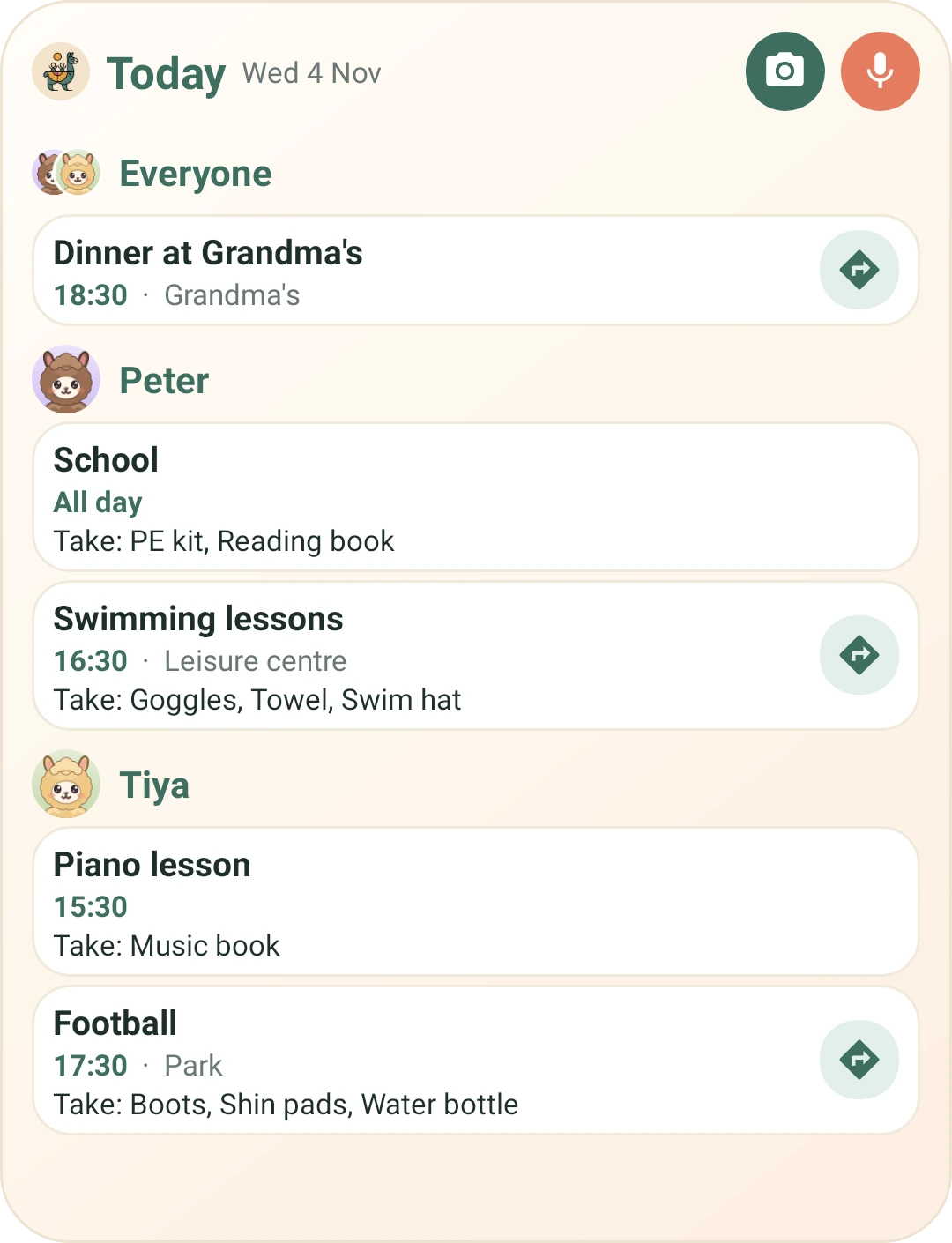
In Okeya, every club has a place in your child's week, and its progress goes with it:
- Okeya recognises common activities by name and suggests the stages most UK clubs use, such as swimming stages, gymnastics levels, music and dance grades, martial arts belts, tennis colours, and Scouts and Girlguiding sections. If your club does it differently, type your own steps, or turn progress off.
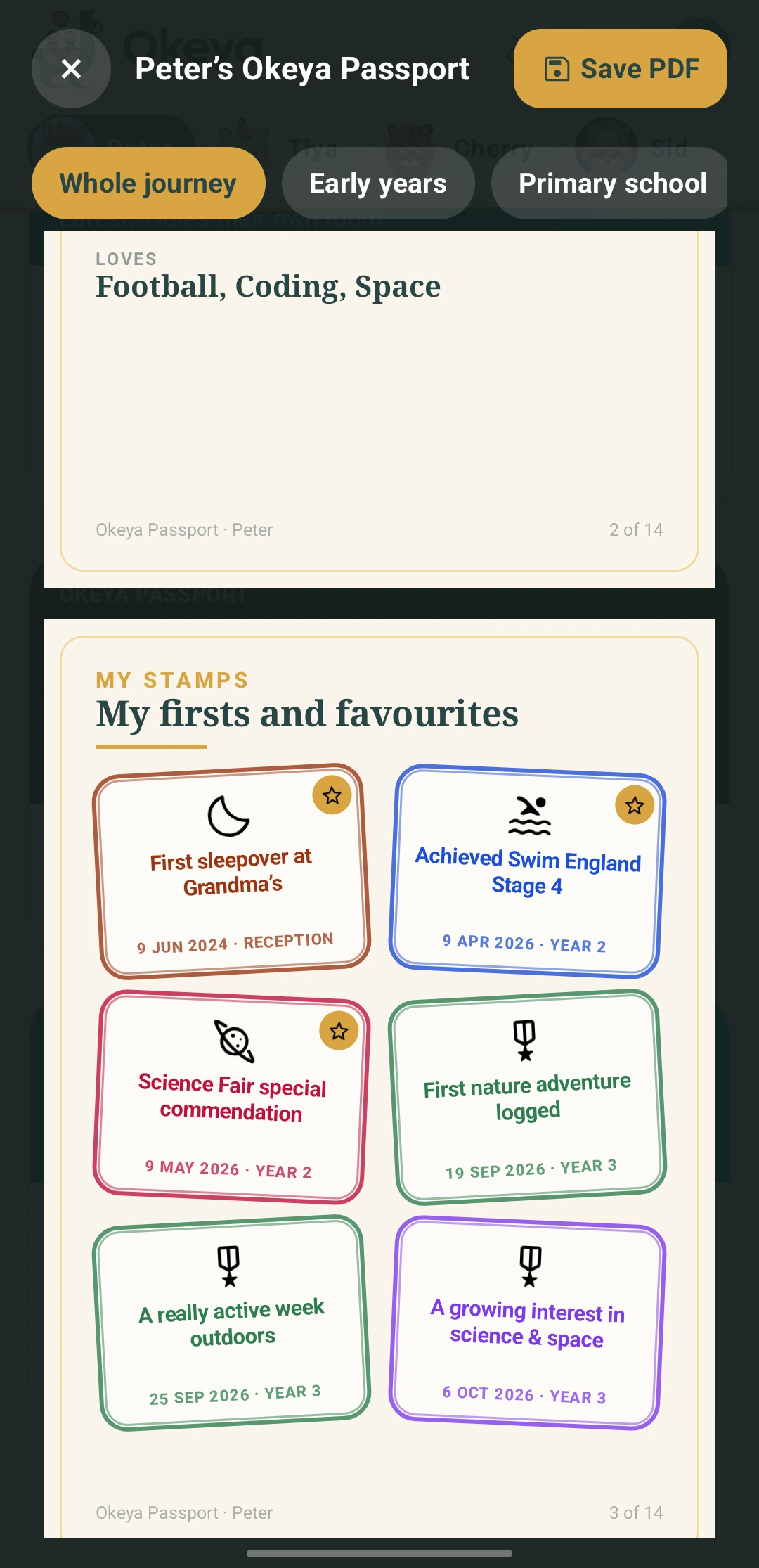
- Tap "Moved up" when they pass a stage, belt or grade. It's saved as a milestone in their Okeya Passport, with the date.
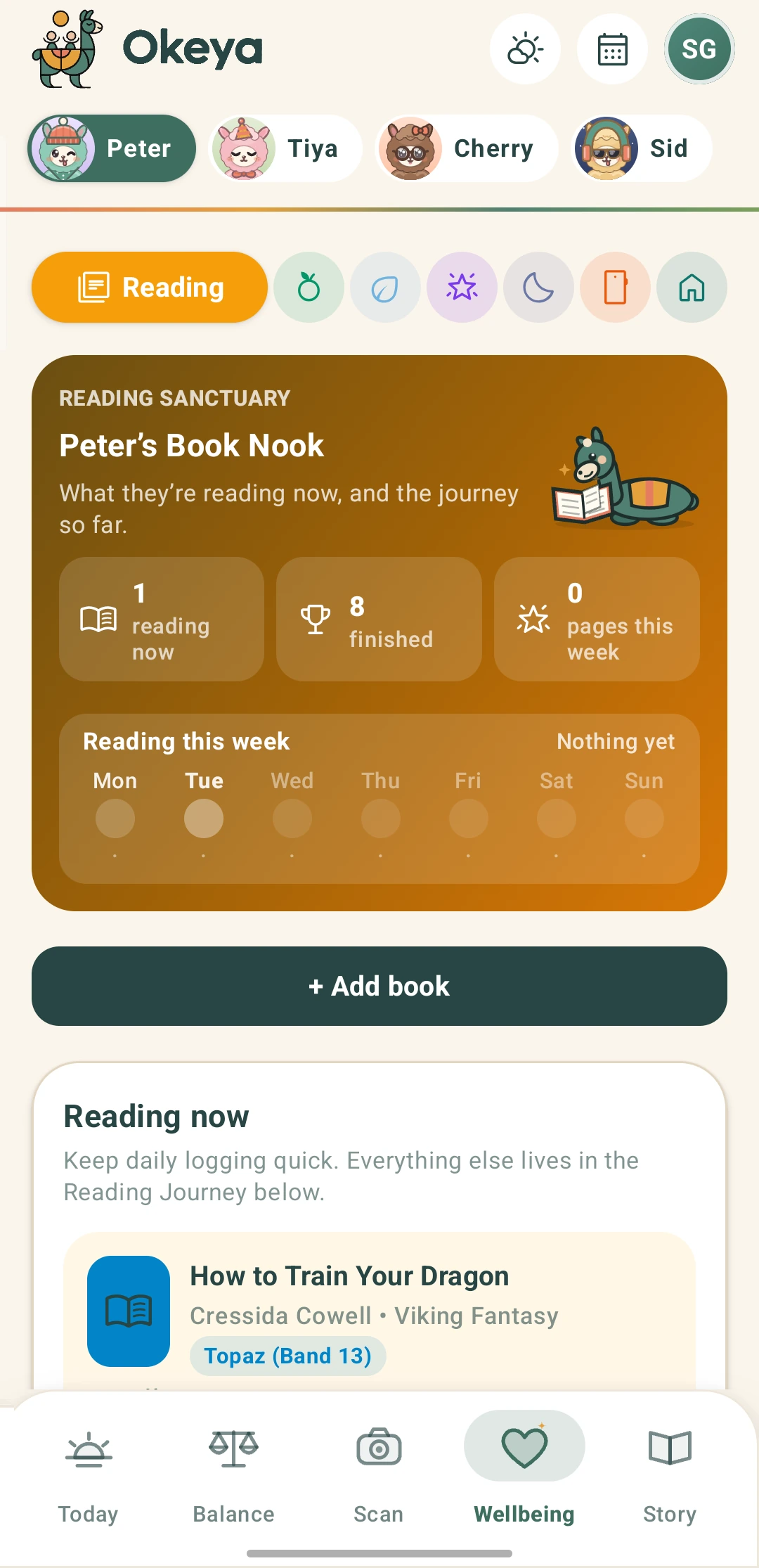
- Clubs without stages still show the skills they're building, like teamwork, ball control or problem solving, because progress isn't only grades.
- Scan a certificate and it becomes a milestone too.
- When a club ends, it stays in their Passport: when they started, when they finished, and how they felt about it.
Years from now, when someone asks what your child did on Saturday mornings, the answer will still be there.