The move from primary to secondary school starts earlier than many parents expect: before Year 6 has properly begun. Here's the year at a glance, so the big dates don't sneak up on you.
The dates below are for England. In Wales, Scotland and Northern Ireland the process and dates are different, so check with your council (in Northern Ireland, the Education Authority).
Summer of Year 5 and the start of Year 6: look around
Many secondary schools hold open days and evenings around now. It's worth going to more than one, even if you think you know where your child will go. Write down what matters to your family, such as the journey, the subjects, clubs and how the school talks to parents, so you can compare.
Applications usually open on 1 September (GOV.UK: how to apply for a school place).
By 31 October: apply
In England you must apply for a secondary school place by 31 October. You apply through your own council, even for schools in another council area (GOV.UK). Your child is less likely to be offered a place at the schools you choose if you miss the deadline.
1 March: offer day
Councils send secondary school offers on 1 March (the next working day if that's a weekend or bank holiday). You must accept the offer by the deadline in the offer letter, or it may be given to someone else (GOV.UK). If you're unhappy with the offer, the letter explains your options, including appealing.
May: national tests
Year 6 children in England take national tests, often still called SATs, in English reading, grammar, punctuation and spelling, and maths. They're normally in May and take less than four hours in all (GOV.UK: key stages 1 and 2). A calm week at home, with early nights and a good breakfast, helps more than extra practice the night before.
The summer term: getting ready
This is when the practical things arrive, often all at once:
- Transition days at the new school, usually in June or July.
- Uniform and kit lists, sometimes from a particular shop.
- The journey. If they'll walk or take the bus on their own, practise the route together over the summer, then let them lead.
- A phone? Many children get their first phone around now. Agreeing the rules together before it arrives is much easier than afterwards. The charity Childnet has a free family agreement template.
- The leavers' bits: the Year 6 trip, the play, the shirt signing, the last assembly.
Growing up, a step at a time
Year 6 is a good time to hand over some everyday jobs: getting themselves ready in the morning, making a packed lunch, walking a familiar route alone, making a phone call themselves. See our ideas for growing-up steps, school year by school year.
How Okeya helps with the move
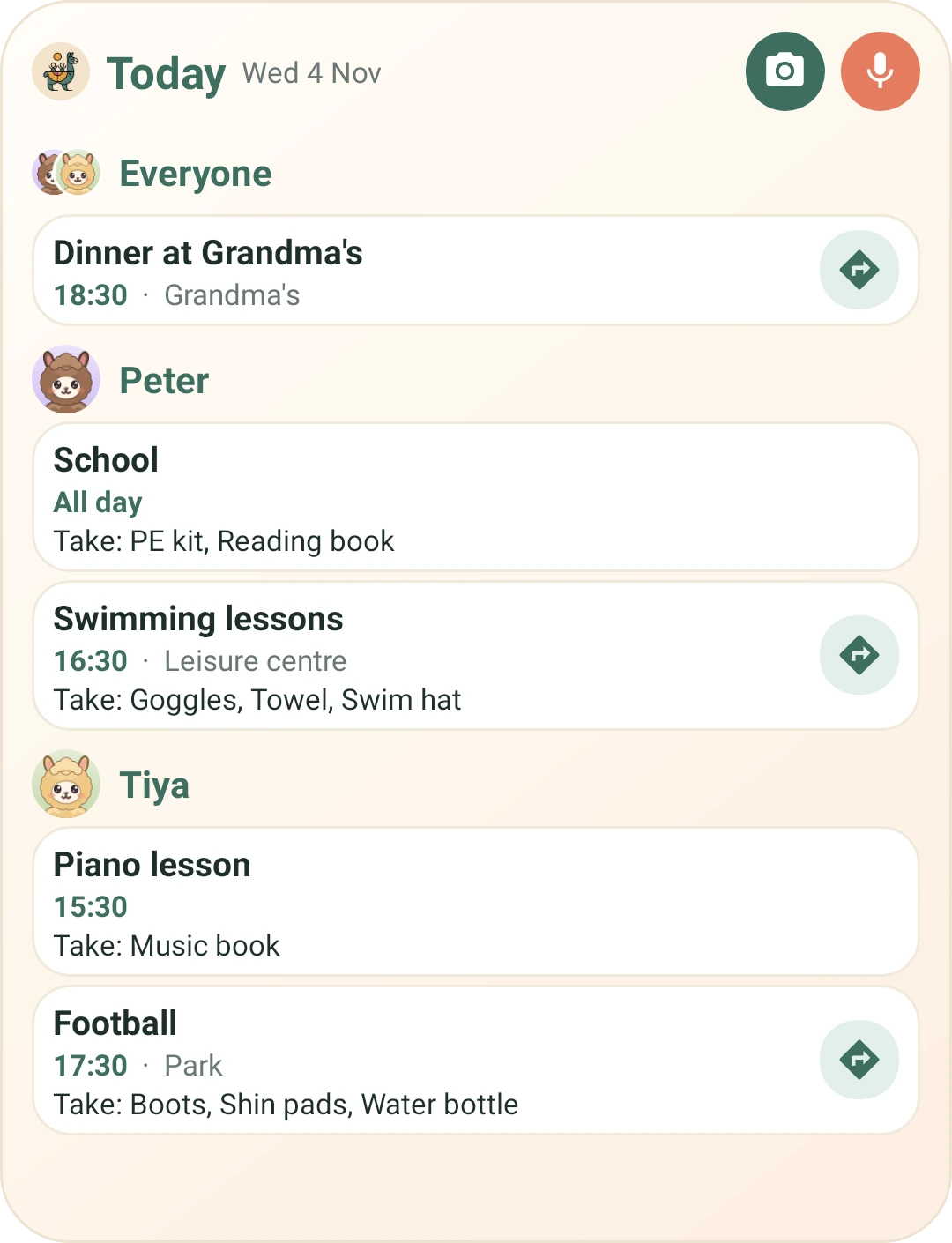
- A "Moving up" card on Today from the summer term of Year 6 to the end of their first term at secondary school, with what's coming next.
- Their Primary Passport: milestones and little wins from their primary years, to look back on together before they start somewhere new.
- Independence steps for Years 5 and 6, and a family phone agreement on the Screens tab, with a nudge to look at it again each term.
- Deadlines for the application and the offer acceptance, so they show on the right day.
Then, from September, Okeya grows up with them: homework evenings, a calmer week, and, when the time comes, exam season.
Contains public sector information licensed under the Open Government Licence v3.0.